
A modern CIL gold processing plant represents the culmination of decades of hydrometallurgical advancement. From run-of-mine ore to doré bars, the process integrates crushing, grinding, cyanide leaching, carbon adsorption, and electrowinning into a continuous, highly efficient operation. This comprehensive guide walks through each stage of the CIL circuit, explaining the equipment, chemistry, and operational parameters that determine success.
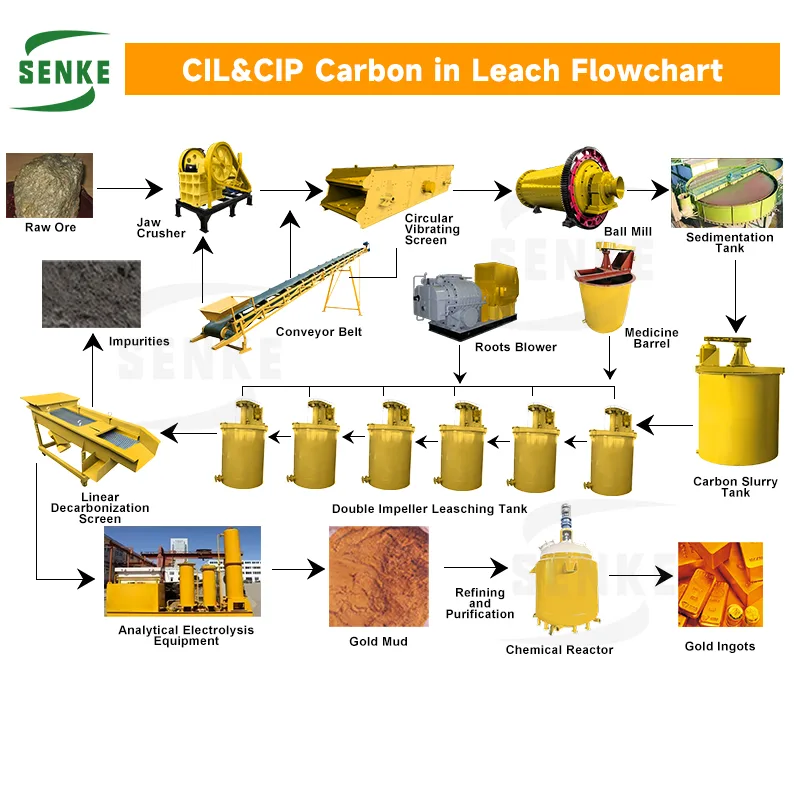
Stage 1: Crushing and Screening
The journey begins with size reduction. Run-of-mine ore typically contains particles up to 600–800 mm, far too large for effective leaching. The crushing section reduces this to a manageable size for grinding .
Typical Configuration:
- Primary crushing: Jaw crusher or gyratory crusher, reducing ore to 150–200 mm
- Secondary crushing: Cone crusher, reducing to 40–60 mm
- Tertiary crushing: Short-head cone crusher, achieving <12–15 mm
- Screening: Vibrating screens in closed circuit, returning oversize for additional crushing
A standard three-stage one-closed-circuit crushing flow can reliably produce feed with 80% passing 10–12 mm, suitable for grinding . Many CIL gold processing plant designs incorporate surge capacity between crushing and grinding to decouple the circuits and maximize overall availability .
Stage 2: Grinding and Classification
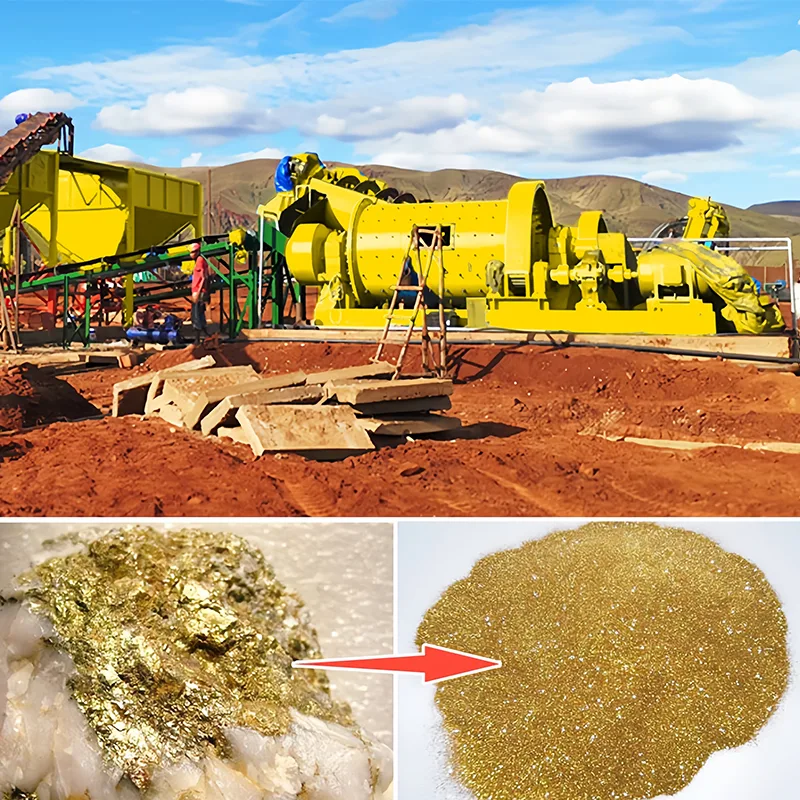
Grinding liberates gold particles from gangue minerals and creates the fine particle size necessary for cyanide access. The target grind is typically 80% passing 75 microns (200 mesh), though this varies with ore characteristics .
Equipment Configuration:
- Primary grinding: Ball mill in closed circuit with spiral classifier
- Secondary grinding: Second ball mill with hydrocyclone classification
- Classification: Hydrocyclones produce overflow at target particle size, underflow returns to grinding
A two-stage two-closed-loop grinding circuit provides the flexibility to achieve fine grinds while maintaining reasonable energy efficiency . The cyclone overflow, now at 30–45% solids, proceeds to thickening.
Stage 3: Thickening and Pre-Leach Conditioning
Thickening serves multiple purposes: it recovers process water for reuse, increases slurry density to optimal leaching concentration, and provides surge capacity between grinding and leaching .
Thickener Function:
- Feed: Cyclone overflow at 15–25% solids
- Underflow: 40–50% solids (optimal for cyanide leaching)
- Overflow: Clear water returned to process
Some CIL gold processing plant designs operate without thickeners when ore grinds coarse and density requirements can be met through classification alone. However, thickeners provide valuable operating flexibility and buffer against grinding circuit disruptions .
Stage 4: Cyanide Leaching with Simultaneous Adsorption
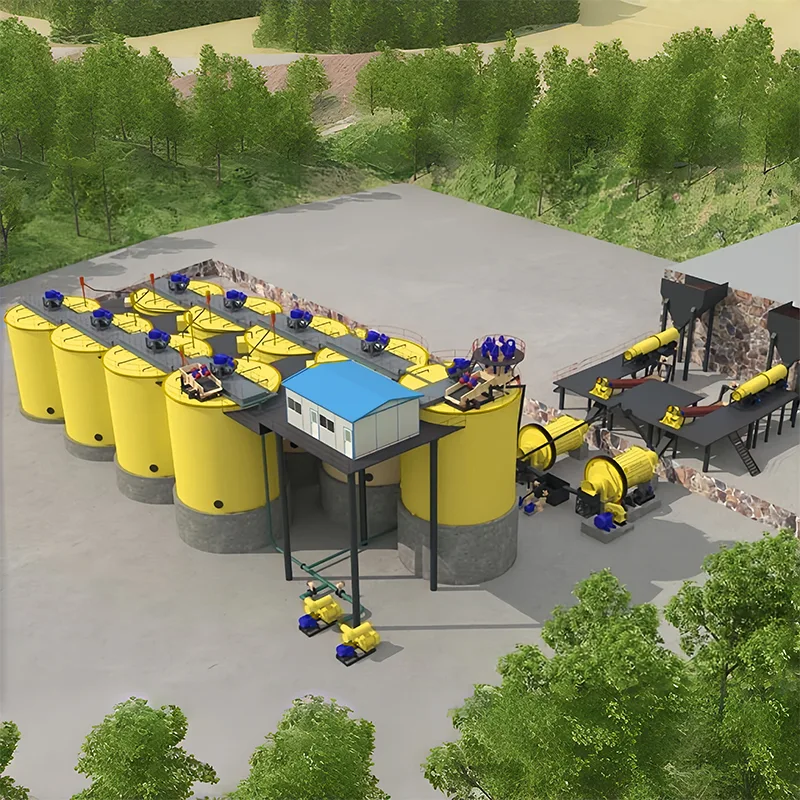
This stage defines the CIL process. Unlike CIP, where leaching completes before carbon addition, CIL combines both functions in a single tank train .
Tank Configuration:
- Typically 6–10 tanks arranged in series, often stepped to utilize gravity flow
- First 1–2 tanks: Initial leaching without significant carbon loading
- Remaining tanks: Simultaneous leaching and adsorption with activated carbon
- Total retention time: 20–24 hours typical
Agitation Requirements:
Effective agitation in a CIL gold processing plant must accomplish multiple objectives :
- Suspend solids (prevent settling)
- Disperse carbon particles throughout slurry
- Introduce oxygen for gold dissolution
- Prevent short-circuiting through the tank train
Modern installations increasingly use high-efficiency agitators like Metso’s OKTOP® reactors, which balance solids suspension with minimized carbon attrition—a critical factor since carbon breakage represents both gold loss and consumables cost .
Chemistry:
- Cyanide concentration: 200–500 ppm NaCN (typical)
- pH: 10.5–11.0 (lime addition for alkalinity)
- Dissolved oxygen: 8–20 ppm (aeration or oxygen injection)
- Temperature: Ambient to 40°C (some ores benefit from heating)
Stage 5: Carbon Retention and Transfer
Carbon must remain in each tank while slurry moves forward. Inter-stage screens retain carbon, typically 6–12 mesh (1.7–3.4 mm), while allowing fine slurry (80% <75 microns) to pass .
Screen Types:
- Vibrating screens (most common)
- Stationary wedge-wire screens
- Air-swept screens for difficult materials
Carbon moves counter-current to slurry—loaded carbon advances toward the head of the circuit, while fresh or regenerated carbon enters at the final tank. Transfer typically occurs via recessed impeller pumps that minimize carbon damage . Transfer frequency can be continuous or intermittent, with intermittent advance often sufficient for moderate feed grades .
Stage 6: Carbon Elution and Regeneration
Loaded carbon, typically containing 3,000–10,000 g/t gold, moves to the elution circuit for stripping. Two primary technologies dominate modern CIL gold processing plant design :
Zadra Process:
- Atmospheric pressure, 90–95°C
- Caustic cyanide solution (1% NaOH, 0.1% NaCN)
- 24–48 hours elution time
- Suitable for smaller operations
AARL Process:
- High pressure (0.5 MPa), 130–150°C
- Acid wash followed by water wash
- 8–12 hours elution time
- Higher elution efficiency, lower solution volumes
Before elution, carbon typically undergoes acid washing to remove inorganic foulants (calcium carbonate, magnesium salts) that block pores and reduce activity .
After elution, thermal regeneration at 650–750°C in a rotary kiln restores carbon activity by volatilizing organic contaminants . Regenerated carbon returns to the adsorption circuit.
Stage 7: Electrowinning and Smelting
The pregnant eluate from elution contains concentrated gold (hundreds to thousands of ppm). Electrowinning recovers this gold as solid metal .
Electrowinning Cell Operation:
- Stainless steel wool cathodes (high surface area)
- Steel anodes
- Current density: 20–50 A/m²
- Deposition time: 3–12 hours depending on configuration
- Gold recovery: >99% from solution
In some compact systems like Fantianliang’s integrated desorption-electrowinning units, gold plates onto cathodes in as little as 3 minutes using optimized cell designs .
The gold-loaded cathodes undergo high-pressure water spraying to remove deposited gold sludge. After drying, the sludge mixes with fluxes (borax, silica, nitre) and smelts at 1,200–1,300°C in an induction or gas-fired furnace. The molten gold pours into molds, producing doré bars at 80–95% purity, ready for refinery .
Stage 8: Tailings Disposal and Detoxification
Environmental responsibility demands proper tailings management. Cyanide destruction typically employs :
- SO₂/air process: INCO method, oxidizing cyanide to cyanate
- Hydrogen peroxide: Direct oxidation
- Carrier’s solution: Natural degradation in tailings ponds
- Cyanide recycling: Recovering cyanide for reuse, reducing detoxification load
Metso’s approach emphasizes selecting the most efficient detoxification method based on individual process requirements, with options including SO₂/air and natural degradation supplemented by active treatment .
Equipment Selection Considerations
Conclusion
A well-designed CIL gold processing plant integrates each stage into a seamless operation, transforming low-grade ore into valuable metal with remarkable efficiency. From the primary crusher to the smelting furnace, every component must work in harmony—and every decision, from tank configuration to carbon transfer frequency, impacts the bottom line. By understanding the complete flowsheet and the rationale behind each step, project developers can make informed decisions that maximize returns over the life of mine.
📞 Ready to design your CIL gold processing plant?
[Request a Process Design] | [View Equipment Catalog] | [The current price of gold]