SENKE Presents the MTS1550 for High-Capacity Organic and Soil Screening
SENKE is highlighting the MTS1550 Mobile Trommel Screen as a proven, high-throughput processing solution engineered specifically for commercial composters, large-scale topsoil suppliers, landscaping contractors, and biomass recovery yards. As international demand for enriched topsoil blends, refined compost, and consistent bio-mulch surges across North America, Europe, Australia, and New Zealand, producers require screening equipment that delivers high volumetric throughput while maintaining continuous separation in challenging moisture conditions.
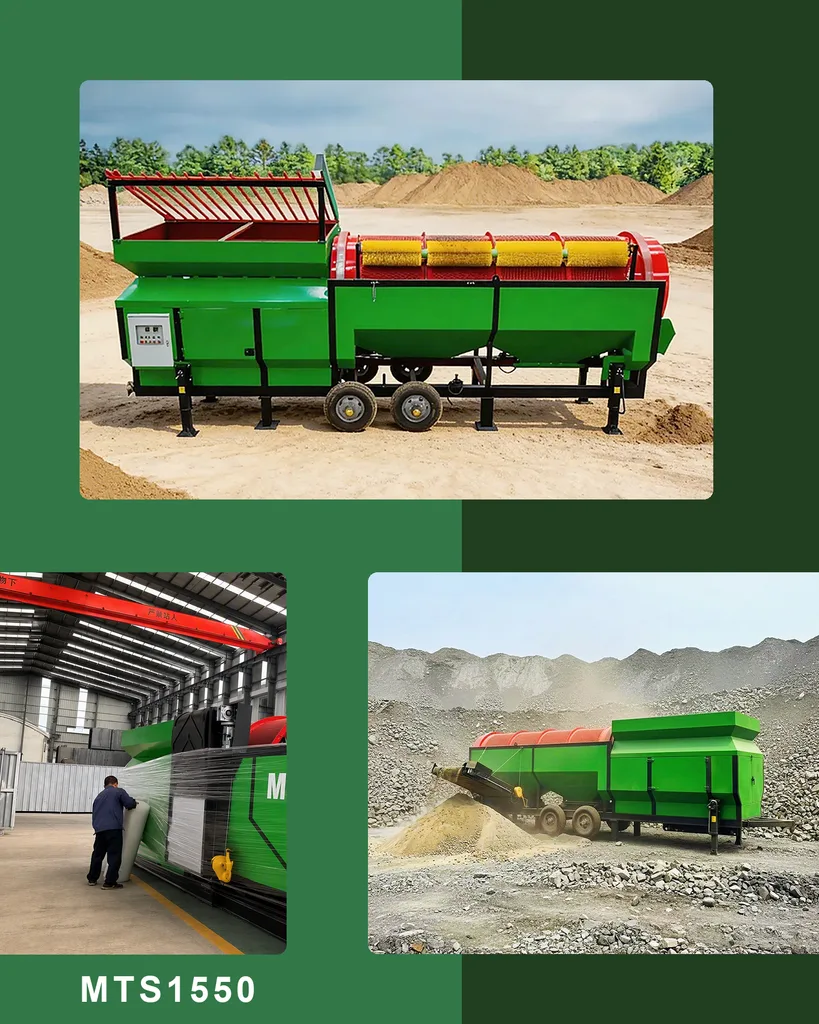
Featuring a robust 1.5-meter diameter by 5.0-meter length rotating drum, the MTS1550 provides the expansive screening surface area and retention time needed for high-volume operations. The machine is engineered to deliver a continuous screening throughput of up to 50 tons per hour (TPH), depending on feedstock density, moisture content, and desired mesh aperture sizing.
This production capability enables environmental contractors and yard operators to keep pace with heavy wheel loaders and excavators, minimizing machine idle time and maximizing daily tonnage. By combining aggressive tumbling action with adaptable mobile engineering, the MTS1550 helps processing facilities turn raw bulk feedstocks into premium, high-value graded products with minimal operating friction.
Superior Separation for Wet Topsoil, Heavy Compost, and Fibrous Mulch
Processing raw topsoil, freshly turned compost windrows, and organic green waste presents serious operational hurdles due to high moisture levels and sticky organic binders. In these applications, conventional flat-deck vibrating screens frequently encounter severe screen blinding, where damp clay and fibrous particles mat across the screen openings, forcing frequent production stoppages for manual cleaning.
The MTS1550 solves this persistent problem through continuous rotary tumbling mechanics combined with an integrated self-cleaning brush system. As moist compost and clumpy topsoil enter the feed hopper and travel into the rotating 1.5m x 5.0m drum, internal lifter flights continuously lift and drop the material. This repeated tumbling impact naturally shatters compacted soil clumps, aerates dense compost, and frees fine particles from fibrous root clusters.
Fine, finished topsoil and mature compost pass cleanly through the screen mesh apertures, while uncomposted wood chunks, roots, stones, plastic film, and oversized debris are conveyed smoothly to the end of the drum for clean discharge. The external brush assembly continuously sweeps across the top of the rotating screen cylinder, dislodging any trapped fibers or damp fines and maintaining maximum open screen area throughout the entire shift.
Versatile Performance Across Multi-Industry Material Streams
While the MTS1550 is widely recognized for excellence in topsoil and compost screening, its heavy-duty rotary architecture makes it equally capable across a broad range of bulk mineral and organic materials. In horticultural and nursery operations, the machine screens peat moss, potting soil mixes, and aged bark mulch to produce uniform, market-ready garden products.
In biomass energy facilities and forestry processing yards, the MTS1550 screens wood chips, forestry slash, and hog fuel, removing oversized branches and abrasive dirt fines to deliver clean, uniform boiler fuel that meets strict combustion specifications. In construction, landscaping, and earthmoving projects, contractors rely on the MTS1550 to reclaim high-quality topsoil from site excavations, as well as classify sand, decorative gravel, and light C&D aggregates.
With customizable screen mesh options ranging from fine 6mm apertures for premium golf-course top dressing to heavy 80mm scalping sections for coarse mulch and gravel, the MTS1550 can be adapted in minutes to meet changing customer specifications across all seasons.
Mobile Efficiency, Dual Power Configurations, and Rapid Setup
Operational flexibility and transport convenience are core engineering highlights of the MTS1550 design. Built on a reinforced structural steel trailer chassis with road-rated dual-axle suspension, pneumatic tires, and a standard commercial towing eye, the entire screening plant can be towed directly between multiple composting yards, agricultural fields, and job sites.
Upon arrival at a new job site, integrated hydraulic leveling legs allow an operator to stabilize and level the machine quickly without requiring dedicated concrete pads, crane support, or complex earthwork preparation. The feed hopper is engineered with a wide opening and low loading height, accommodating direct loading from medium-to-large wheel loaders and excavators.
To suit diverse project locations and regulatory standards, SENKE offers the MTS1550 with both an efficient diesel engine package and a 3-phase electric motor drive. The fuel-efficient diesel engine delivers complete autonomy on remote farms, forestry landings, and off-grid facilities. For permanent recycling centers and indoor transfer stations with electrical access, the electric drive delivers whisper-quiet operation, zero localized exhaust emissions, and exceptionally low operating costs per screened ton.
Low Maintenance Design and Long-Term Operating Reliability
Maximizing production uptime while minimizing maintenance overhead is essential for commercial screening profitability. The MTS1550 is engineered from heavy-duty structural steel and wear-resistant materials, ensuring long-term structural durability even under continuous multi-shift operation.
Routine servicing is straightforward and ergonomic: heavy-duty drum support trunnions, drive chains, bearings, and lubrication fittings are easily accessible from ground level. Wide-opening access covers allow maintenance technicians to inspect and service engine and hydraulic components quickly without complex disassembly. Furthermore, the modular drum screen panels can be replaced or interchanged individually, saving significant time and expense compared to single-piece drum replacements.
The intuitive operator control panel provides direct control over drum rotation and conveyor speeds, enabling smooth operational fine-tuning to accommodate sudden changes in material moisture or feed volume. This robust, user-centric mechanical layout ensures predictable maintenance scheduling and long service intervals. For busy production facilities, this low-maintenance approach translates into lower consumable costs, higher operational safety, and maximum equipment uptime throughout years of demanding seasonal processing.
Factory-Direct Customization and International Backing from SENKE
With more than 30 years of specialized manufacturing experience in rotary drum screeners, conveyors, and waste separation systems, SENKE provides end-to-end technical support and factory-direct customization to international buyers. SENKE’s application engineers work closely with clients across Europe, North America, Australia, and New Zealand to tailor each machine to specific jobsite parameters.
Available customization options include extended discharge conveyors (available in 3m, 4m, 5m, and 6m lengths), multi-fraction screening systems capable of producing up to three separate product sizes simultaneously, custom hopper grizzly bars for heavy rock pre-scalping, and tailored color branding. Every export machine is manufactured under stringent CE compliance standards and backed by comprehensive operating manuals, setup video guides, and rapid international spare parts dispatch.
To evaluate how the MTS1550 Mobile Trommel Screen can boost throughput, lower processing costs, and improve product quality in your topsoil, compost, or biomass operations, contact SENKE’s engineering sales team today. Provide your material characteristics, target volume, and site requirements to receive a customized technical specification and formal quotation.
Recommended Call to Action: Contact SENKE today to discuss your material screening goals and request an MTS1550 technical proposal and quote.
Source pages & references: